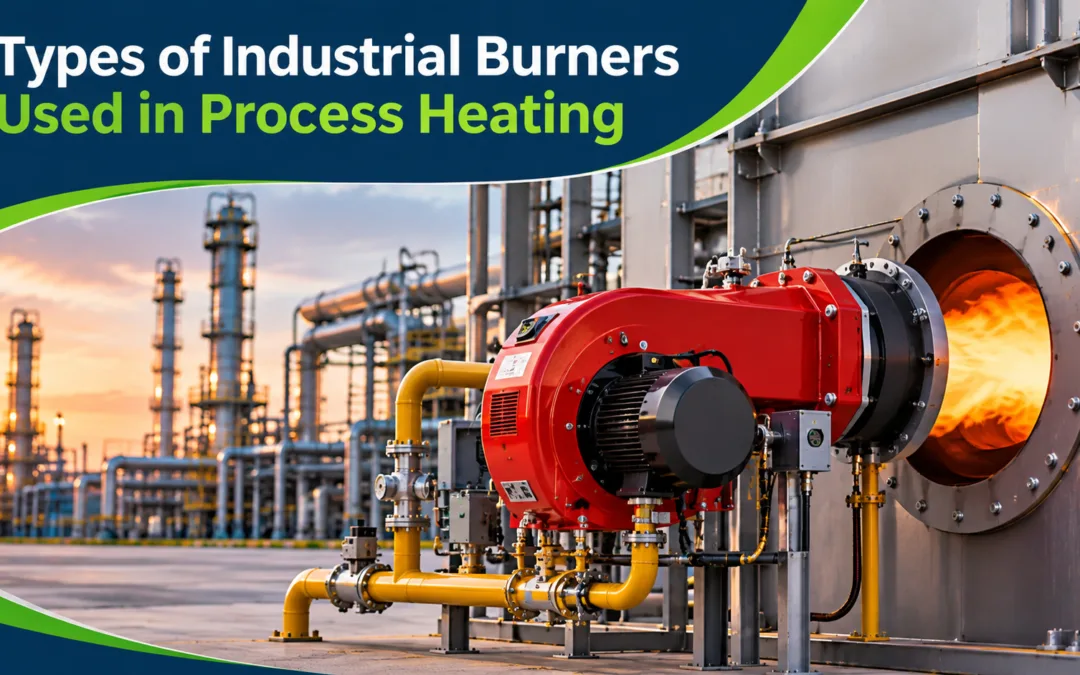
Types of Industrial Burners Used in Process Heating
Industrial burners are a key component of combustion-based heating systems used across oil and gas, refining, petrochemical and other industrial sectors.
Their main function is to mix fuel and combustion air in a controlled manner to generate a stable flame and provide the required heat input to industrial equipment.
However, not all burners are designed in the same way. Different industrial burner types are developed to meet specific requirements relating to fuel characteristics, heating capacity, combustion air supply, emissions, operating conditions and equipment configuration.
Understanding these differences is important when selecting a burner for a new installation or upgrading an existing process heating system.
What Is an Industrial Burner?
An industrial burner is a combustion device designed to release thermal energy by burning a fuel under controlled conditions.
Depending on the application, the fuel may include natural gas, fuel gas, diesel or fuel oil. The burner combines the fuel with an appropriate amount of combustion air and directs the resulting flame into the heating equipment.
Industrial burners are used in equipment such as:
-
Direct-fired process heaters.
-
Thermal fluid heaters.
-
Water bath heaters.
-
Industrial furnaces.
-
Boilers and other fired heating systems.
The burner must be selected and engineered to match the heater design, required heat duty, fuel characteristics and applicable operating requirements.
Main Industrial Burner Types
Industrial burners can be classified according to different design and operating characteristics. Two important categories are natural draft and forced draft burners, which describe how combustion air is supplied.
Other classifications relate to the fuel used, burner geometry and combustion technology.
1. Natural Draft Burners
Natural draft burners rely on the natural movement of air into the burner and the draft created by the heating system’s exhaust arrangement.
The pressure difference helps draw combustion air into the burner without relying on a dedicated combustion air fan for that purpose.
Key characteristics include:
-
A relatively simple combustion air arrangement.
-
Dependence on the heater’s draft characteristics.
-
Suitability for applications where natural draft operation meets the required duty.
-
Design considerations relating to stack height, pressure losses and ambient conditions.
Natural draft burners are used in selected fired heater applications where the required combustion performance can be achieved through the natural draft arrangement.
2. Forced Draft Burners
Forced draft burners use a fan or blower to supply combustion air to the burner.
The fan provides controlled airflow and helps maintain the air supply required for the specified firing conditions.
Key characteristics include:
-
Mechanical supply of combustion air.
-
Greater control over combustion air delivery.
-
Suitability for applications requiring a forced air arrangement.
-
Additional equipment and maintenance considerations associated with the fan and air system.
Forced draft burners may be selected when the heater design or operating requirements call for a controlled, mechanically supplied combustion air flow.
The choice between natural and forced draft should be based on the complete heater design rather than assuming one arrangement is always more efficient.
3. Gas-Fired Industrial Burners
Gas-fired burners use gaseous fuels, such as natural gas or suitable process fuel gas, to generate heat.
They are commonly used in oil and gas facilities, refineries and industrial process heating systems where gas fuel is available.
Their design must account for:
-
Gas composition and heating value.
-
Fuel pressure and supply conditions.
-
Required firing rate.
-
Flame stability.
-
Combustion air availability.
-
Emissions requirements.
Some burner designs are developed to handle specific fuel gas characteristics, including variations in gas quality.
4. Oil-Fired Industrial Burners
Oil-fired burners use liquid fuels such as diesel or fuel oil.
Depending on the fuel properties and burner design, the system may require fuel atomisation to produce droplets that can mix effectively with combustion air.
Important design considerations include fuel viscosity, temperature, pressure, filtration, atomisation method and fuel handling requirements.
Oil-fired burners may be suitable where liquid fuel is the preferred or available energy source for the application.
5. Dual-Fuel Burners
Dual-fuel burners are designed to operate using two different fuels, typically a gaseous fuel and a liquid fuel.
They can provide operational flexibility where fuel availability varies or where an alternative fuel source is required.
The burner and fuel system must be engineered for the specified fuels, including the required fuel changeover arrangements, combustion performance and safety controls.
Not every burner can operate on multiple fuels, and dual-fuel capability should be confirmed against the equipment specification.
Different Burner Design Technologies
Beyond the combustion air arrangement and fuel type, industrial burners can also be classified according to their design and method of mixing fuel and air.
Two examples relevant to process heating applications are jet-type and Coanda-effect burners.
1. Jet-Type Burners
Jet-type burners use a fuel gas jet to draw combustion air into the burner through the inspirator.
The expanding gas stream helps entrain air, creating the fuel-air mixture required for combustion.
This design can be suitable for certain oilfield applications, particularly where the fuel gas characteristics and operating environment make a robust, relatively straightforward arrangement beneficial.
Integraheat identifies jet-type burners as a practical choice for oilfield applications where the ability to handle dirty gas and lower maintenance requirements can offer advantages.
Integraheat
2. Coanda-Effect Burners
Coanda-effect burners use a different gas injection arrangement in which fuel gas flows through a small annular gap, creating an effect that draws air into the burner.
This design relies on the geometry and precision of the burner profiles to achieve the intended air entrainment characteristics.
According to Integraheat, Coanda-type burners are suited to applications using filtered, non-corrosive fuel gas that is predominantly methane. They are also used in selected gas distribution applications where quiet operation and NOx control are important considerations.
Integraheat
The choice between jet-type and Coanda-effect burners depends on fuel quality, operating requirements, emissions targets and the specific heater application.
How to Select the Right Industrial Burner
Selecting from the available industrial burner types requires a detailed understanding of the process and the heating equipment.
1. Required Firing Rate
The burner must provide the heat input required by the process under the specified operating conditions.
Its capacity and turndown range should be suitable for the expected operating load, including minimum and maximum firing conditions.
2. Fuel Type and Quality
Fuel availability and composition influence burner design.
Natural gas, process gas, diesel and fuel oil have different combustion characteristics. Variations in fuel composition can affect flame stability, emissions and combustion performance.
3. Combustion Air Arrangement
The choice between natural and forced draft depends on the heater configuration, combustion air requirements and available draft conditions.
The burner must operate within the intended combustion air range.
4. Emissions Requirements
Industrial burners may be required to meet specified emissions limits, including limits for nitrogen oxides (NOx) and carbon monoxide (CO).
Emissions performance depends on burner design, fuel composition, combustion conditions and the overall heater configuration.
Low-NOx burner technologies may be considered where emissions requirements are particularly demanding.
5. Heater Compatibility
A burner should be selected as part of the complete heating system.
Its flame characteristics, dimensions, firing range and mounting arrangement must be compatible with the firebox or heater design.
6. Maintenance and Operating Conditions
Maintenance access, fuel cleanliness, environmental exposure and operating conditions should be considered during burner selection.
A design that is suitable for one facility may not be the best choice for another installation with different fuel quality or operating requirements.
When Should an Industrial Burner Be Upgraded?
An existing burner may require replacement or upgrading when its performance no longer meets the operating or project requirements.
Common reasons include:
-
Poor combustion performance.
-
Increased fuel consumption.
-
Difficulty maintaining stable operation.
-
Emissions performance outside specified limits.
-
Frequent maintenance or reliability problems.
-
Obsolete components or limited spare parts availability.
-
Changes in fuel quality or operating conditions.
Before an upgrade, the existing burner, fuel system, heater geometry and control arrangement should be evaluated together.
Replacing the burner without checking its compatibility with the existing heater may lead to performance or operational problems.
Industrial Burner Solutions for Process Heating
Choosing the right industrial burner requires a balance between combustion performance, fuel characteristics, heating capacity, emissions requirements and long-term operating considerations.
The best solution is not necessarily the burner with the highest firing rate or the lowest initial cost. It is the design that meets the specific requirements of the heating system while supporting reliable and efficient operation.
Integraheat offers bespoke natural and forced draft burners for process heating systems, with firing rates stated on its product page from 300 kW to 30 MW and designs developed for a range of industrial applications.
Integraheat
Explore our Industrial Burners to learn more about our burner designs and combustion solutions, or contact our team to discuss your application.