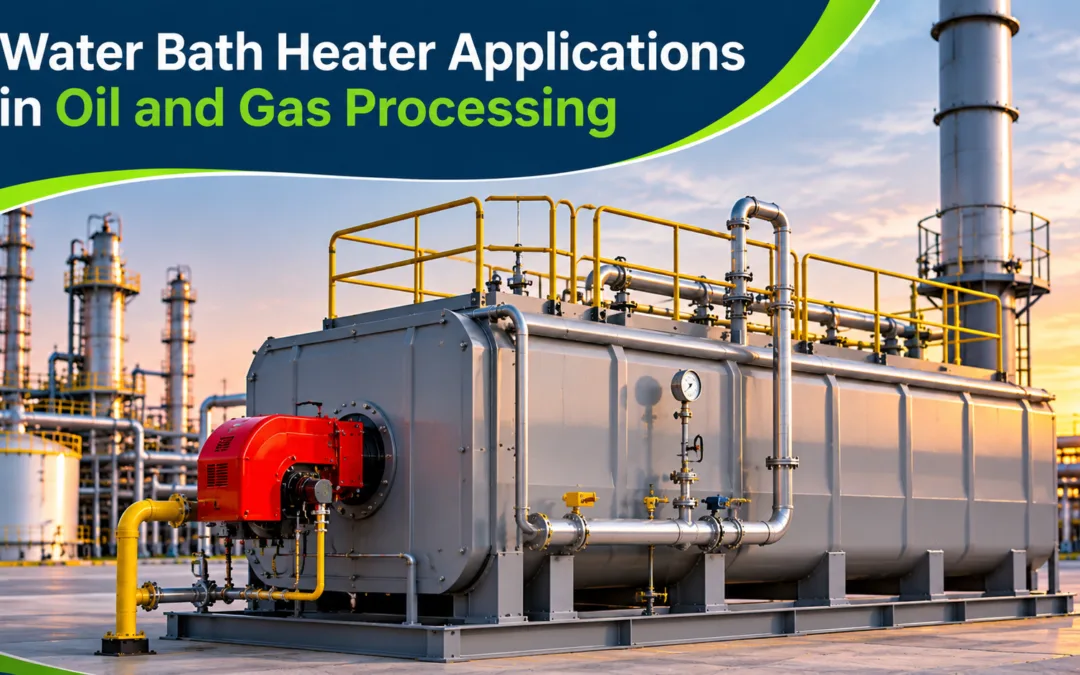
Water Bath Heater Applications in Oil and Gas Processing
Heating plays an important role in oil and gas processing, where maintaining the correct fluid temperature can support efficient production, transportation and treatment. From wellhead installations to gas processing facilities, industrial heating systems are used to manage temperature changes, improve process conditions and help prevent operational problems.
Among the available solutions, water bath heater applications are widely associated with upstream and midstream oil and gas operations. These heaters provide indirect process heating by transferring heat through a water or glycol bath, allowing process fluids to be heated without direct exposure to the burner flame.
Understanding where water bath heaters are used, how they operate and what factors influence their selection can help operators identify the right heating solution for their facilities.
What Is a Water Bath Heater?
A water bath heater is an indirect-fired heating system designed to transfer heat to a process fluid through a coil submerged in a heated bath.
The system typically consists of a burner, firetube, heater shell, process coil and exhaust stack. The burner heats the firetube, which transfers thermal energy to the surrounding bath fluid. The process fluid then flows through the submerged coil, absorbing heat without coming into direct contact with the combustion gases.
Depending on the required operating conditions, the bath medium may be water, a water-glycol mixture or another suitable heat transfer fluid.
This arrangement provides controlled indirect heating and is particularly useful in applications where process fluids need to be heated under demanding field conditions. Integraheat’s water bath heater designs follow API 12K where applicable, with customised configurations available to meet specific project requirements.
Integraheat
Key Water Bath Heater Applications in Oil and Gas Processing
Water bath heaters are used across several stages of oil and gas operations. Their suitability depends on the process fluid, required outlet temperature, flow rate, operating pressure and site conditions.
1. Wellhead Heating
At the wellhead, produced fluids may experience significant temperature and pressure changes as they move from the reservoir to surface processing equipment.
Heating can help maintain suitable process conditions and reduce the risk of issues associated with low temperatures, including hydrate formation in gas-containing streams. In certain applications, water bath heaters are used to heat production fluids before they enter downstream equipment.
The heater is selected according to the fluid composition, required temperature increase, flow rate and operating pressure.
2. Natural Gas Heating
Natural gas heating is one of the established water bath heater applications in gas production and distribution facilities.
Gas temperature can decrease during pressure reduction, particularly across pressure regulating and control equipment. Under certain operating conditions, this temperature reduction may contribute to hydrate formation or other low-temperature operating challenges.
A water bath heater can raise the gas temperature before or after pressure reduction, depending on the process design. This helps maintain the required operating temperature and supports reliable gas handling.
3. Crude Oil Heating
Crude oil properties vary depending on its composition, temperature and production conditions. In some installations, heating is required to achieve suitable process temperatures before separation, treatment or transportation.
Water bath heaters can be used to transfer heat indirectly to crude oil flowing through a process coil. The required heating duty depends on the crude oil characteristics, inlet temperature, flow rate and target outlet temperature.
The system should be designed around the actual process requirements rather than relying on a standard configuration for every crude oil application.
4. Gas Transmission and Distribution
Gas transmission and distribution facilities often include pressure reduction stations, metering stations and other equipment where temperature management is important.
Water bath heaters can be installed to provide the required gas temperature before or after pressure regulation. This is particularly relevant where pressure drops may cause a reduction in gas temperature.
The heater capacity and configuration should account for the expected gas flow, pressure conditions, ambient temperature and required outlet temperature.
5. Dew Point Heating
Dew point control is an important consideration in natural gas processing and transportation.
When gas temperature falls below the relevant hydrocarbon or water dew point under operating conditions, liquid condensation may occur. This can affect downstream equipment and pipeline operation.
Heating may be used as part of a wider process arrangement to maintain the gas above a specified temperature threshold. Water bath heaters can provide this heat where indirect heating is suitable for the process.
The actual dew point requirement should be established through gas composition and process calculations.
6. LNG and LPG Vaporisation Support
Water bath heating systems may also be considered in applications involving LNG or LPG handling, where controlled heat input is required as part of a vaporisation or gas conditioning arrangement.
The suitability of a water bath heater depends on the specific fluid, operating pressure, required heat duty and process configuration. The design must account for the properties of the fluid and the relevant equipment and safety requirements.
7. Regeneration Gas Heating
Certain gas processing systems use regeneration gas to remove moisture or other contaminants from treatment media.
Heating the regeneration gas to the required temperature supports the regeneration cycle. Water bath heaters may be used where indirect heating is appropriate and the process temperature requirements are compatible with the selected bath medium.
How Does a Water Bath Heater Work?
The operating principle is based on two separate heat transfer processes:
-
Combustion: The burner generates heat by burning the selected fuel, typically fuel gas or another suitable fuel.
-
Bath heating: The firetube transfers heat from combustion gases to the surrounding bath medium.
-
Process heating: The process fluid flows through the submerged coil and absorbs heat from the bath.
-
Temperature control: Instrumentation and control arrangements regulate burner operation to maintain the required process conditions.
-
Exhaust discharge: Combustion gases pass through the exhaust arrangement and are discharged through the stack.
The indirect heating arrangement separates the process fluid from the burner flame and combustion gases. This is one of the key characteristics that makes water bath heaters suitable for many oil and gas field applications.
What Factors Should Be Considered When Selecting a Water Bath Heater?
Selecting a suitable heater requires an understanding of both process requirements and site conditions.
Important considerations include:
-
Process fluid: Composition, density, viscosity and other relevant physical properties.
-
Flow rate: The quantity of fluid that needs to be heated.
-
Inlet and outlet temperatures: The required temperature increase determines the heating duty.
-
Operating pressure: The process coil must be designed for the specified pressure and applicable design code.
-
Bath medium: Water, glycol or another suitable heat transfer medium should be selected according to temperature and environmental requirements.
-
Fuel availability: The burner and fuel train must suit the available fuel and site conditions.
-
Ambient conditions: Temperature, wind and environmental exposure can influence the overall design.
-
Maintenance requirements: Access to the firetube, process coil and other components should be considered throughout the equipment lifecycle.
For facilities operating in the Middle East, high ambient temperatures, site conditions, fuel availability and project-specific requirements should all be considered during engineering and equipment selection.
Why Is Indirect Heating Important in Oil and Gas Facilities?
Indirect heating provides a way to transfer thermal energy to process fluids without exposing them directly to combustion gases.
For suitable applications, this arrangement offers several operational benefits:
-
Controlled heat transfer to the process fluid.
-
Separation between the combustion system and the process stream.
-
Flexibility in heater configuration and bath medium.
-
Suitability for a range of oil and gas field applications.
-
Equipment arrangements that can be engineered around specific process conditions.
However, the actual performance and operating suitability of a heater depend on its thermal and mechanical design, burner selection, control system and maintenance practices.
Choosing the Right Water Bath Heater Solution
Water bath heaters are used in a range of oil and gas applications, including wellhead heating, natural gas heating, crude oil heating, transmission and distribution, dew point heating and regeneration gas heating.
Choosing the right system requires more than selecting a heater based on its general application. Process conditions, heat duty, operating pressure, fuel type, environmental conditions and applicable standards must all be evaluated during the engineering stage.
Integraheat designs and supplies customised water bath heaters for demanding industrial applications, with integrated heater, burner and control system solutions.
Explore our Water Bath Heaters to learn more about the available solutions, or contact our team to discuss your process heating requirements.